Featured Work
BĀZ-TĀB | (بازتاب)
BĀZ-TĀB | (بازتاب)
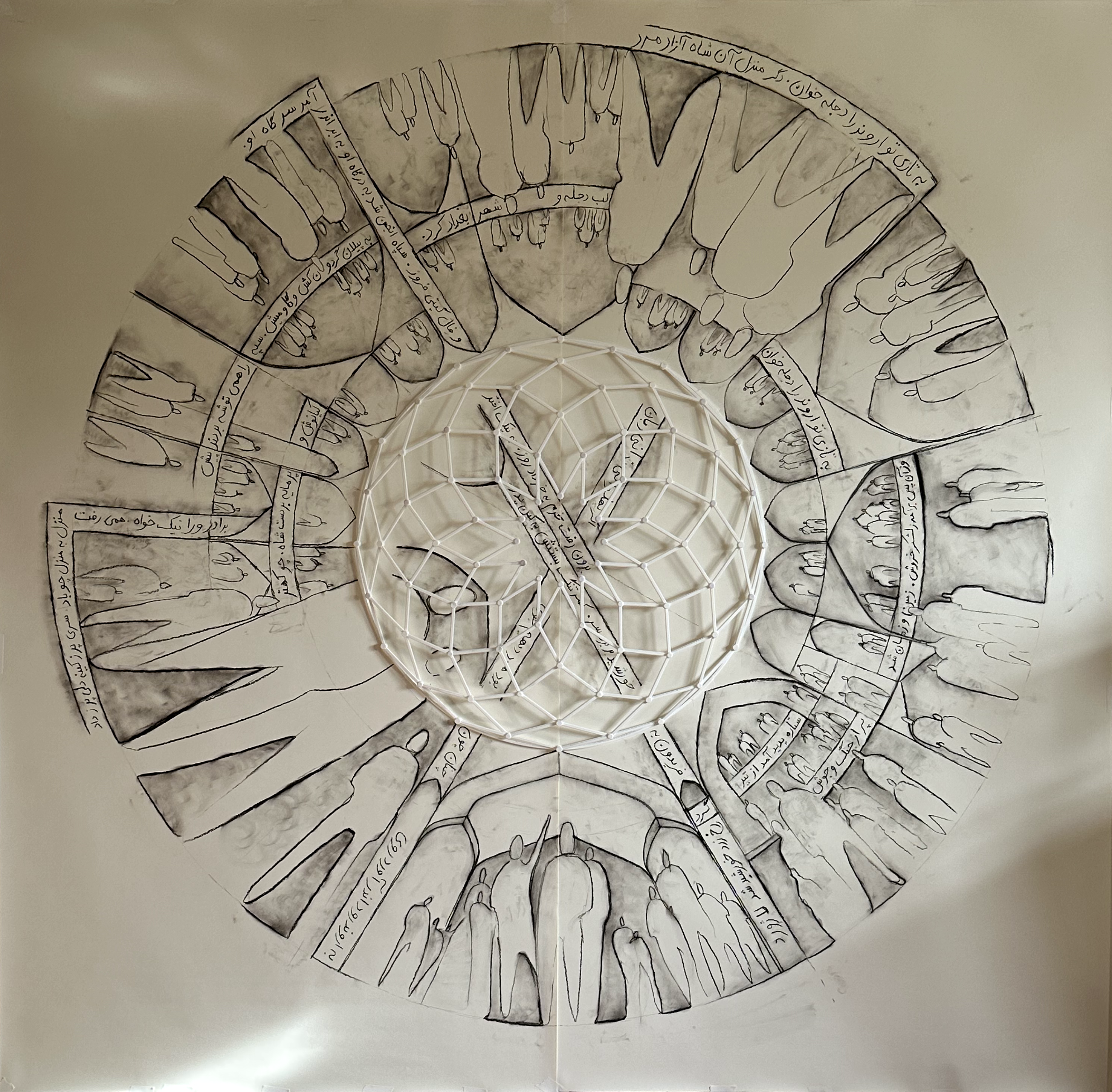
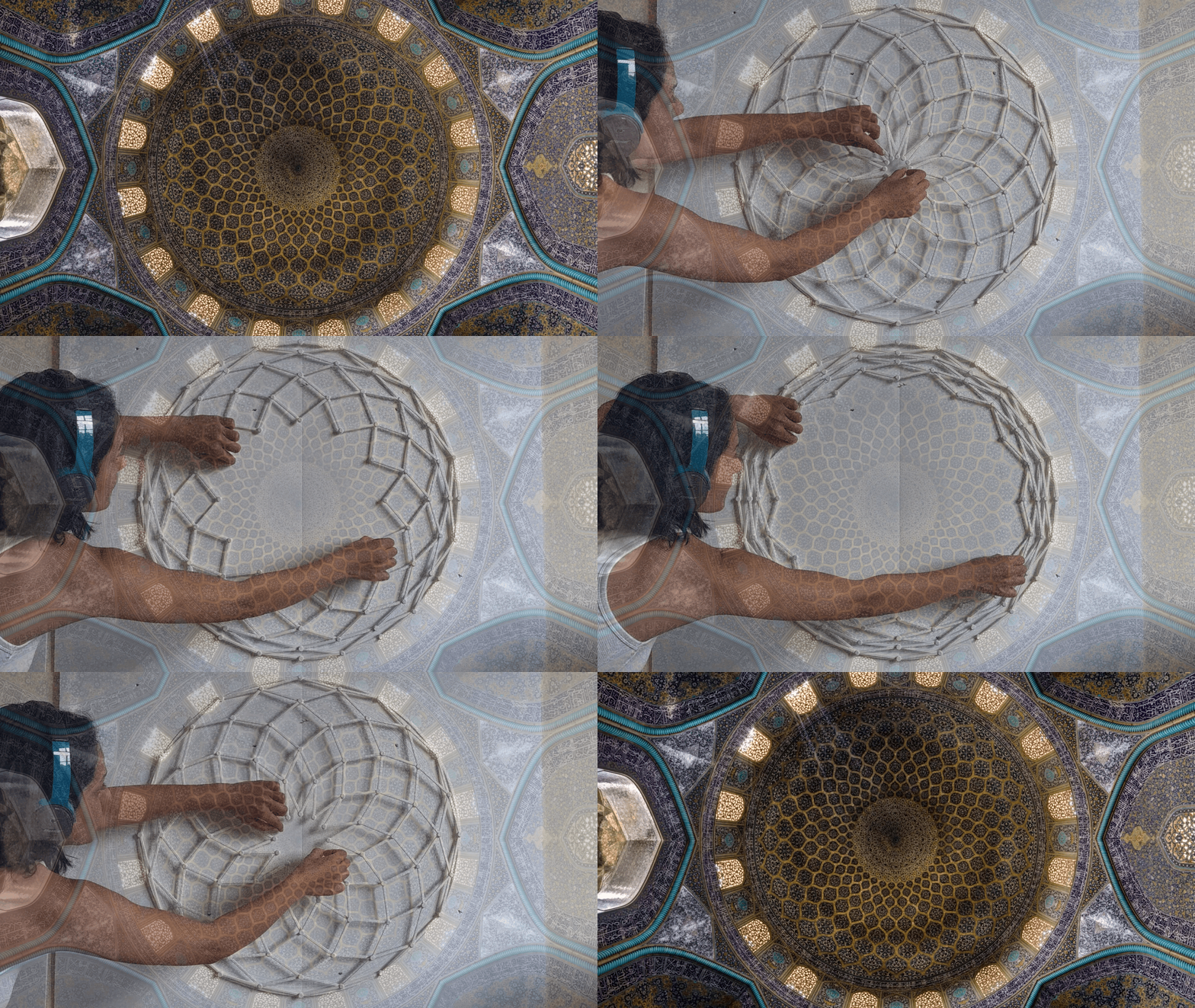
Bāz-tāb is a memory of Iran's architectural heritage — courtyards, domes, arches, and the life held within them. Each piece begins as a large-scale hand drawing of a specific site, built up gradually in charcoal, and documented frame by frame to become an animated drawing . Three-dimensional paper sculptures grow out of the drawings, collapsing the boundary between image and object. Sound, currently in development, will complete the work, mirroring the spatial and emotional quality of each place. Together, the drawing, moving image, and sound aim to recreate something closer to how we actually remember a place: not as a photograph, but as a dream, fragmentary, layered, and alive.
Each work is complete as a drawing installation and as a stop-motion animation. Sound remains in progress, arriving as a final layer.
GRAND BĀZĀR
GRAND BĀZĀR is a labyrinth where losing your way leads you to a friendly shopkeeper who guides you.
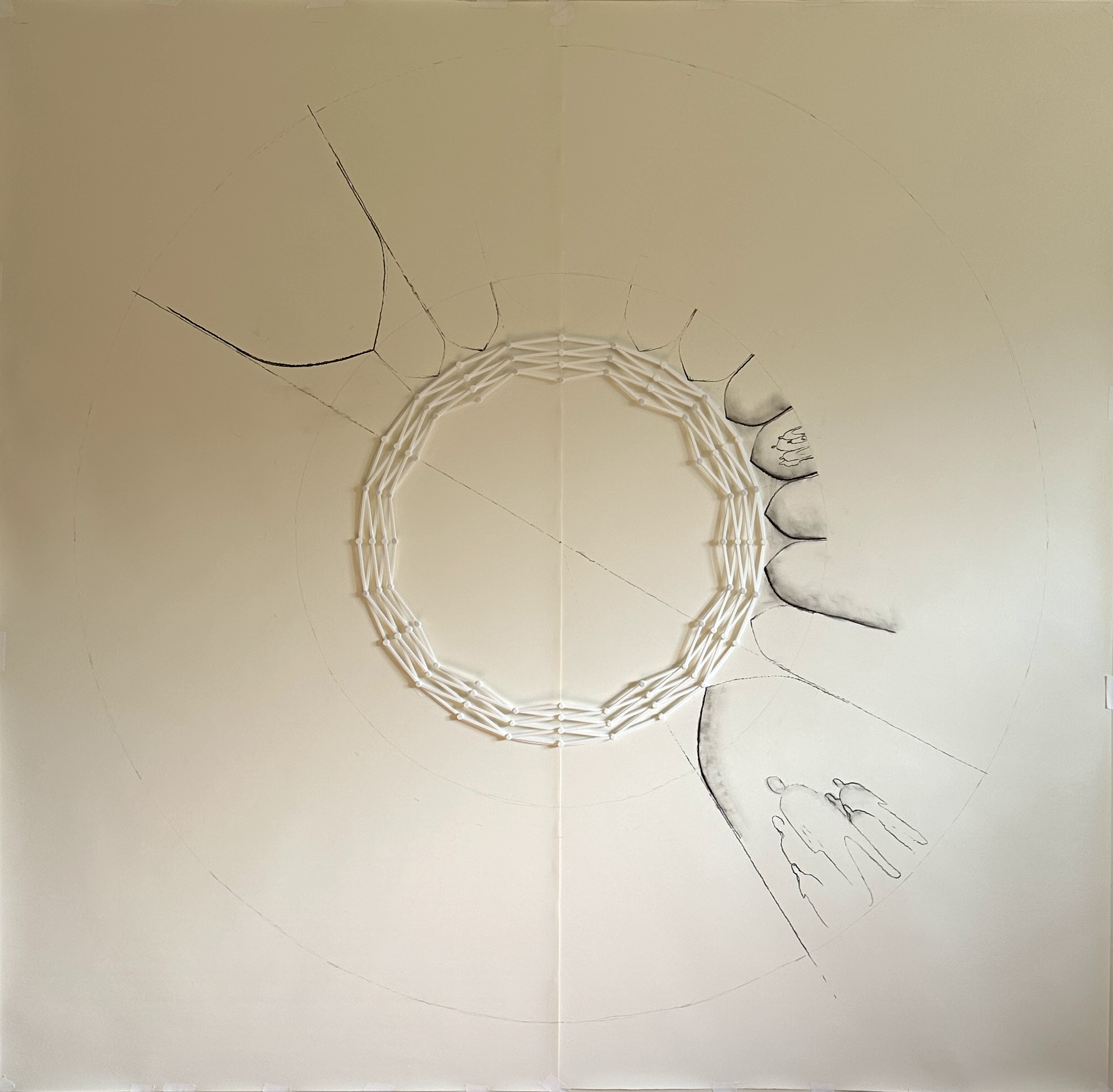
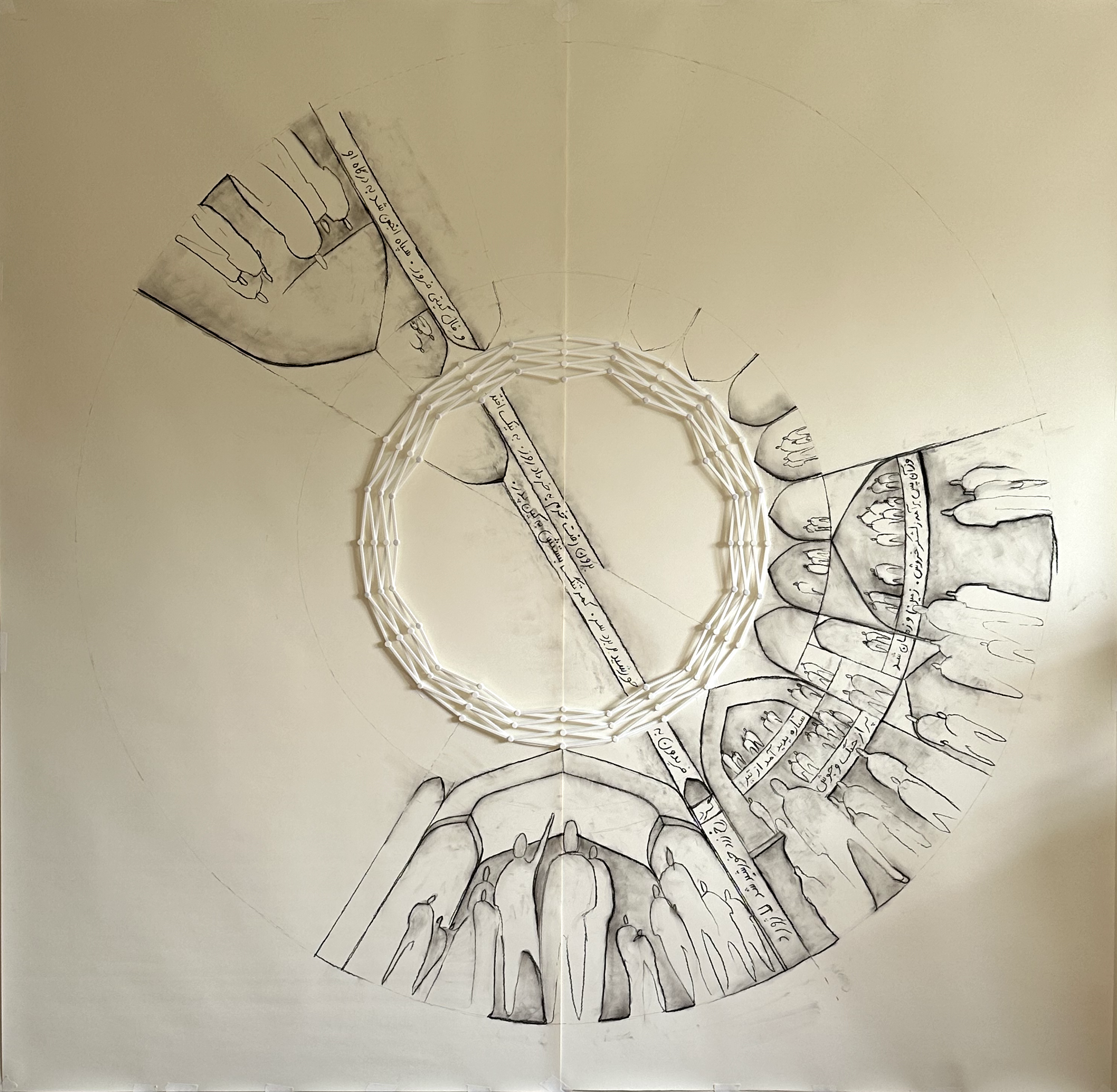
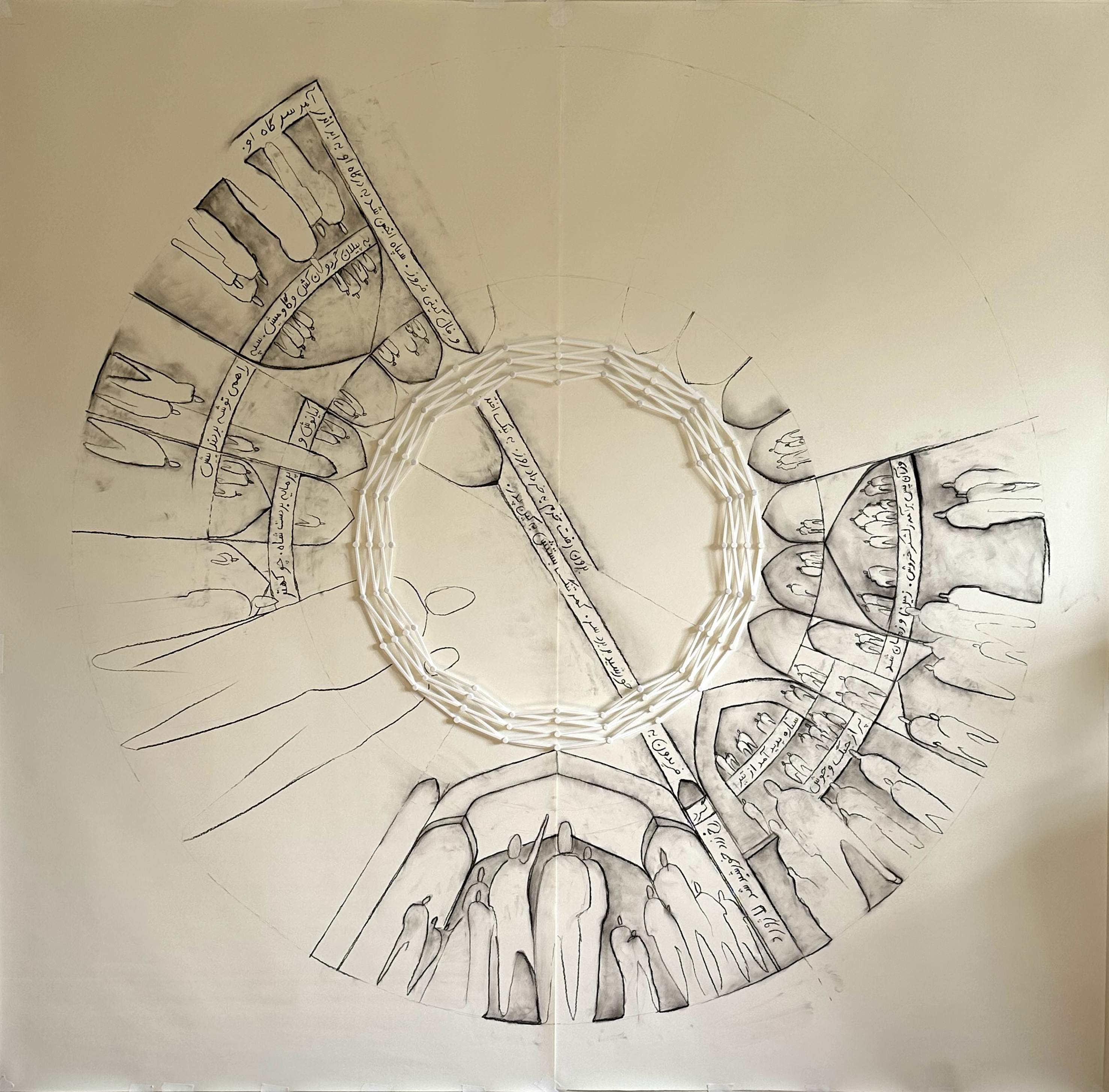
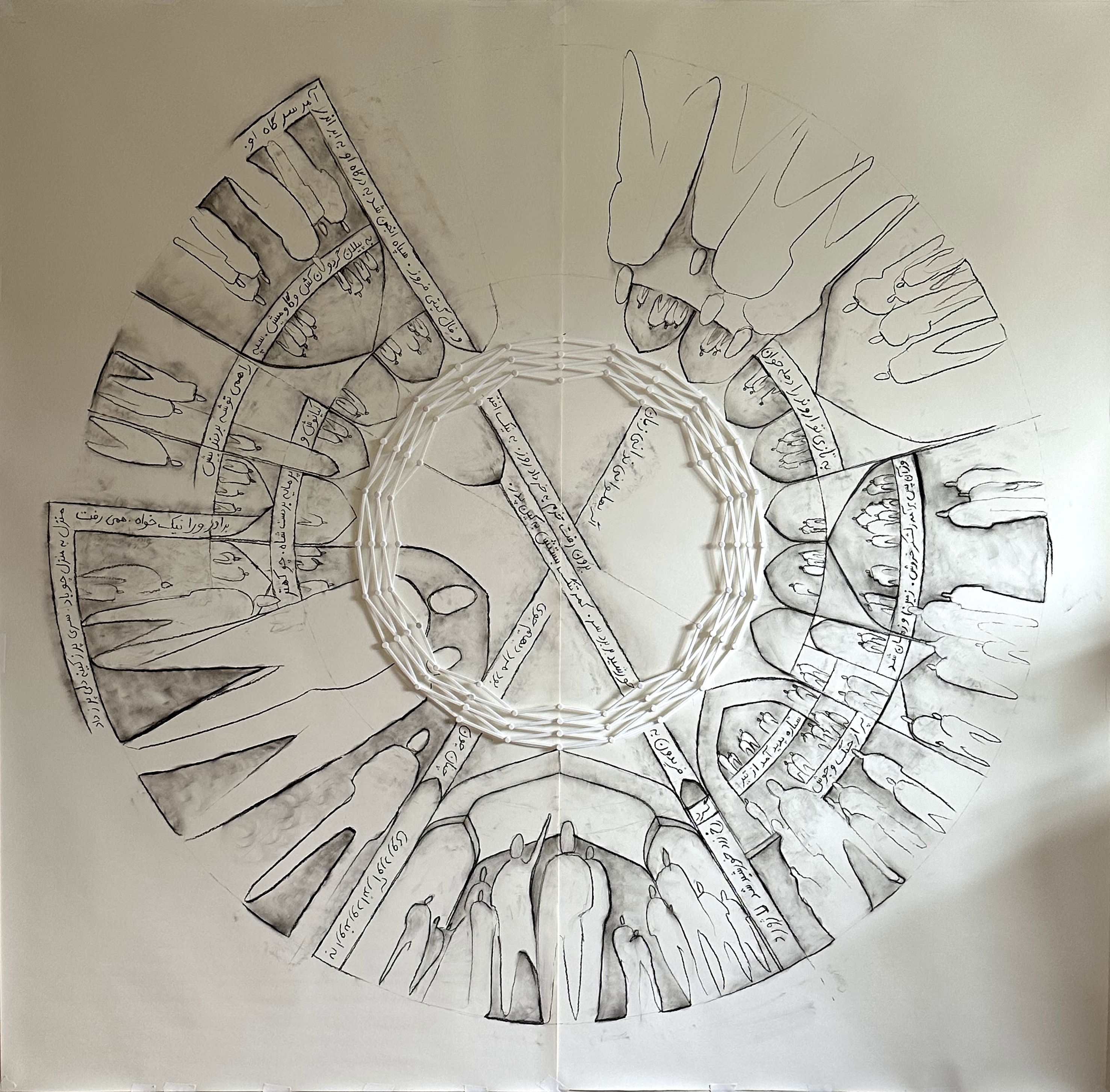
GRAND BĀZĀ R is the first in the series. It was created during the Iran Revolution of 2026, when protests erupted in Tehran’s bazaar after the catastrophic collapse of the rial. People reclaimed the space — closing the shops and gathering from every corner of the market. Together our voices grew louder.
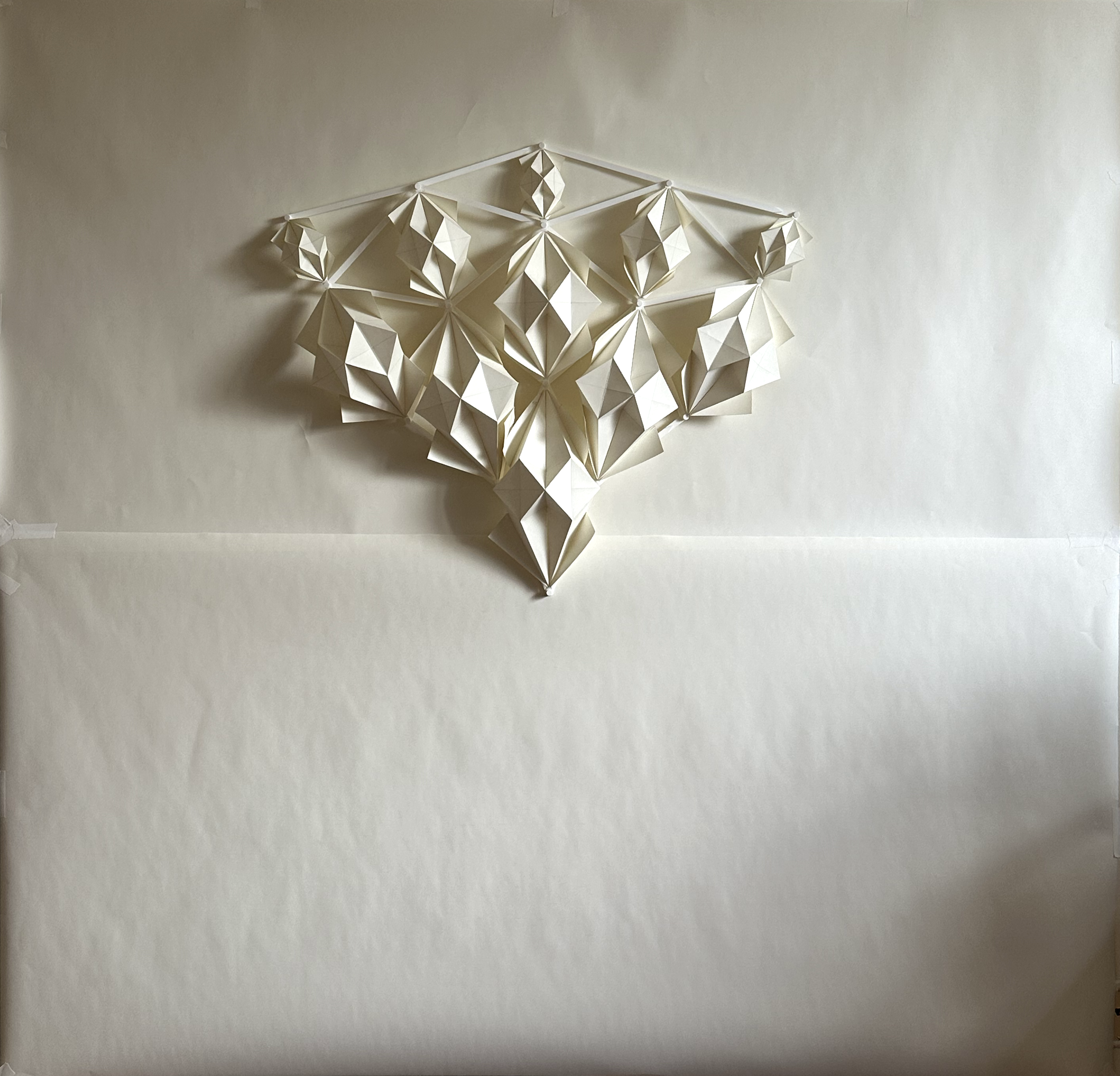
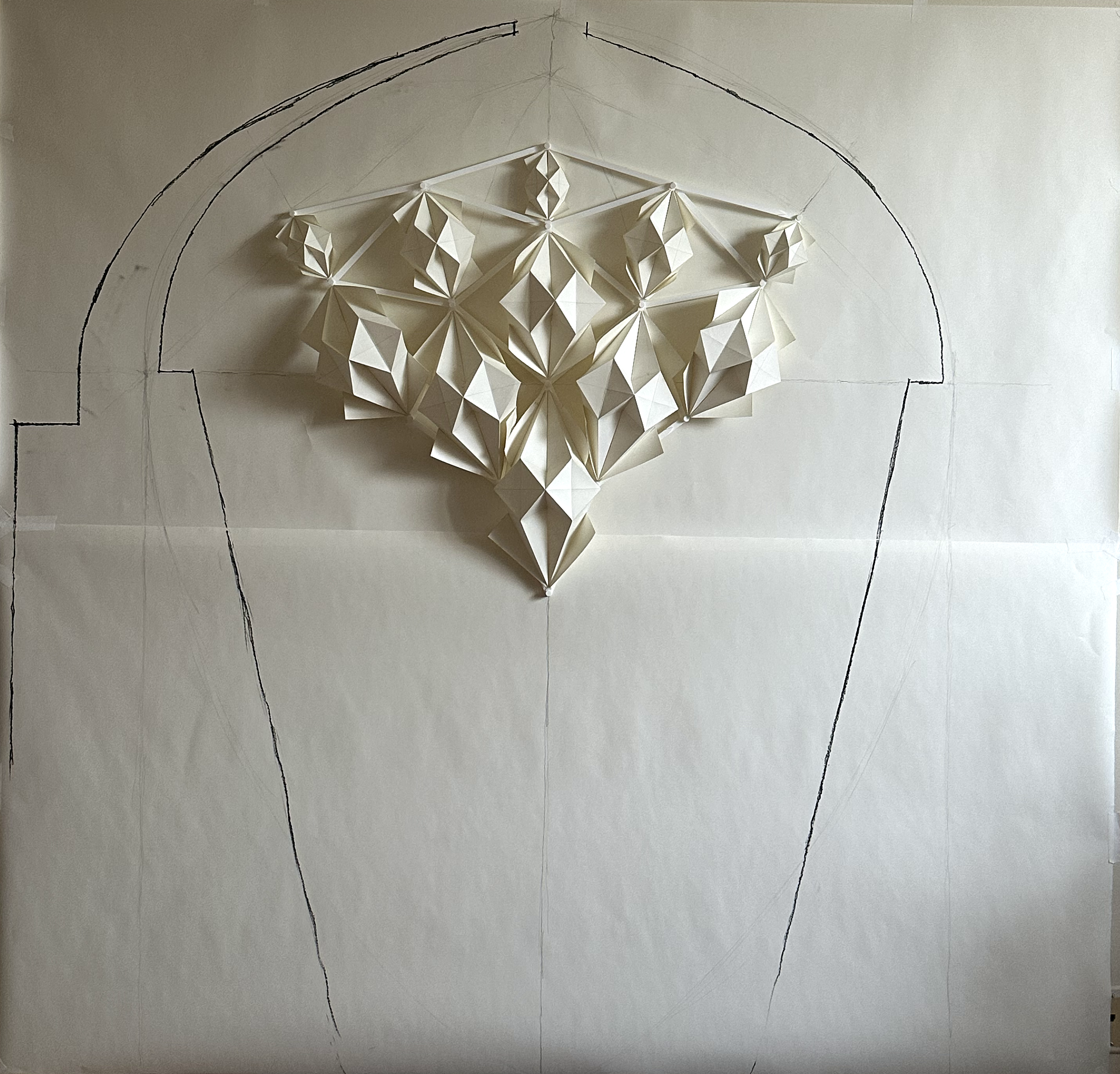
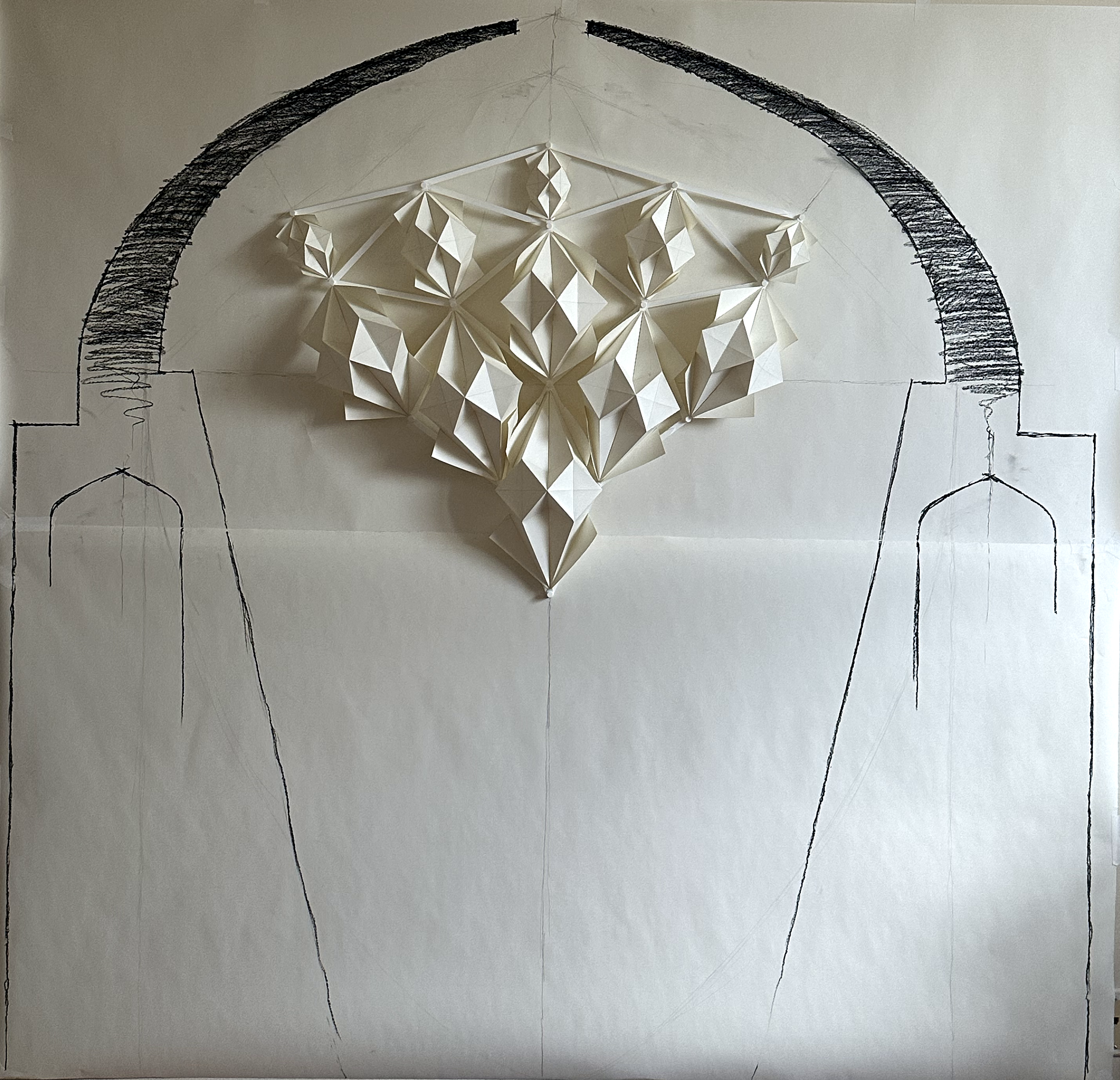
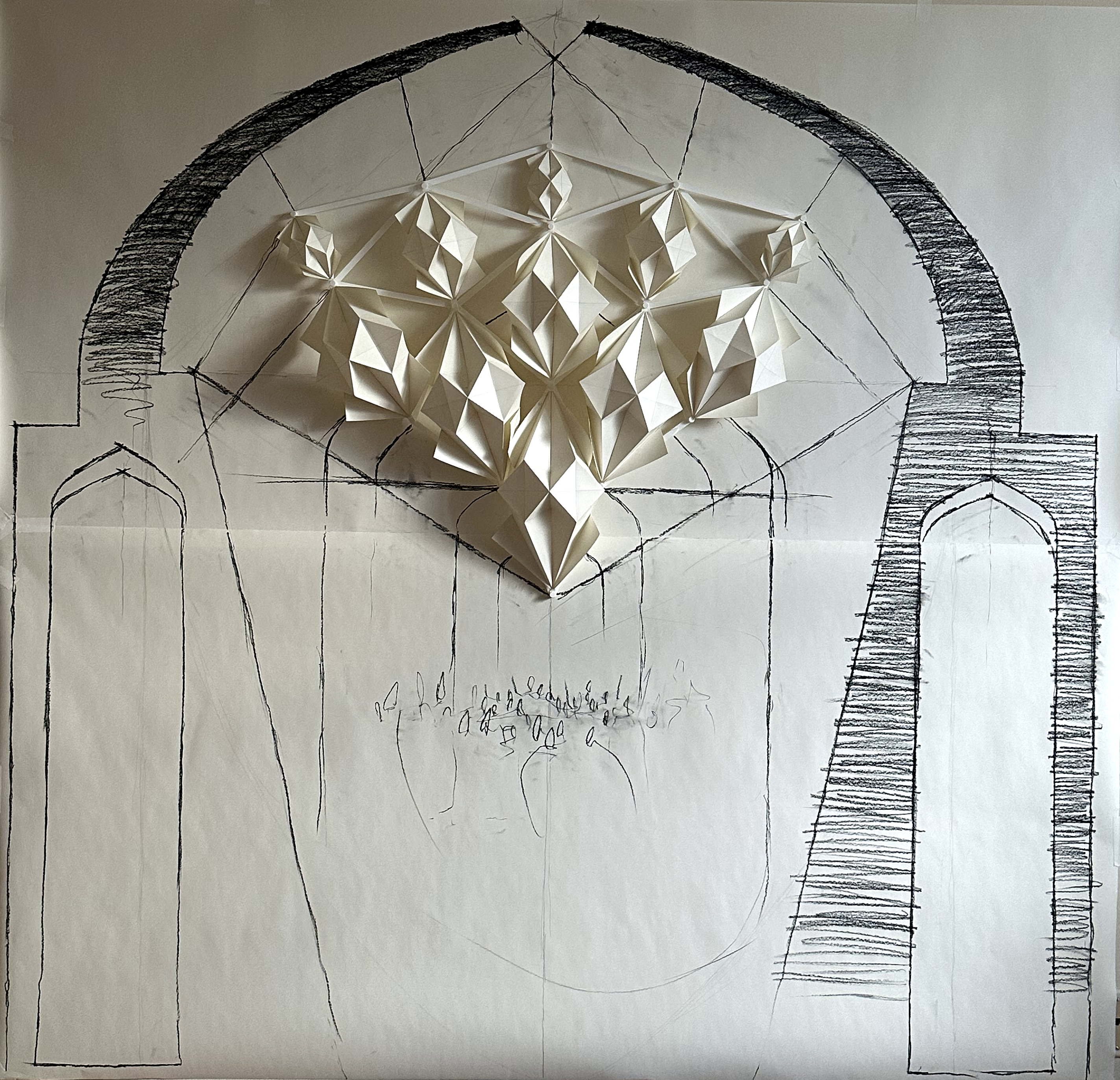
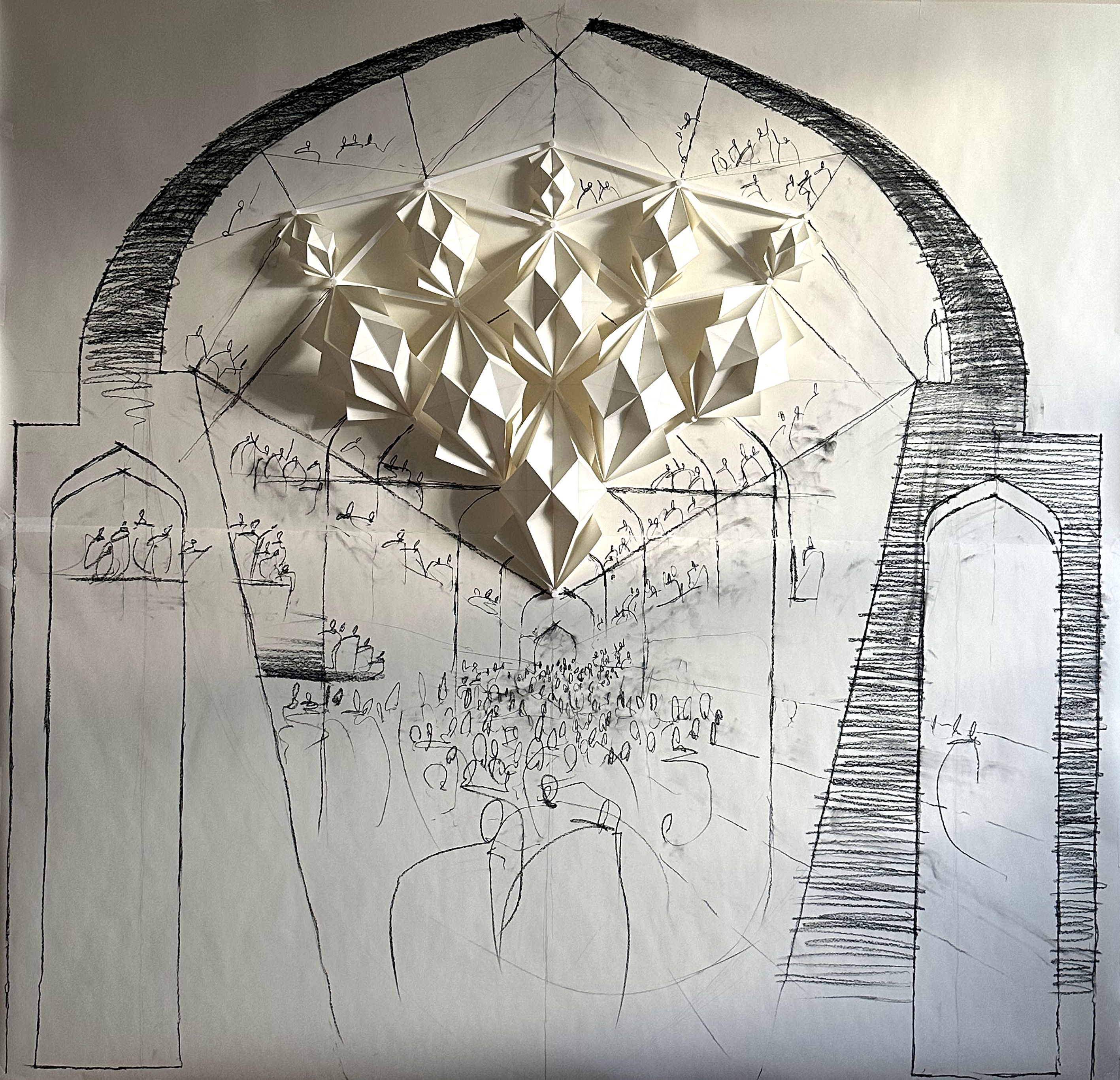
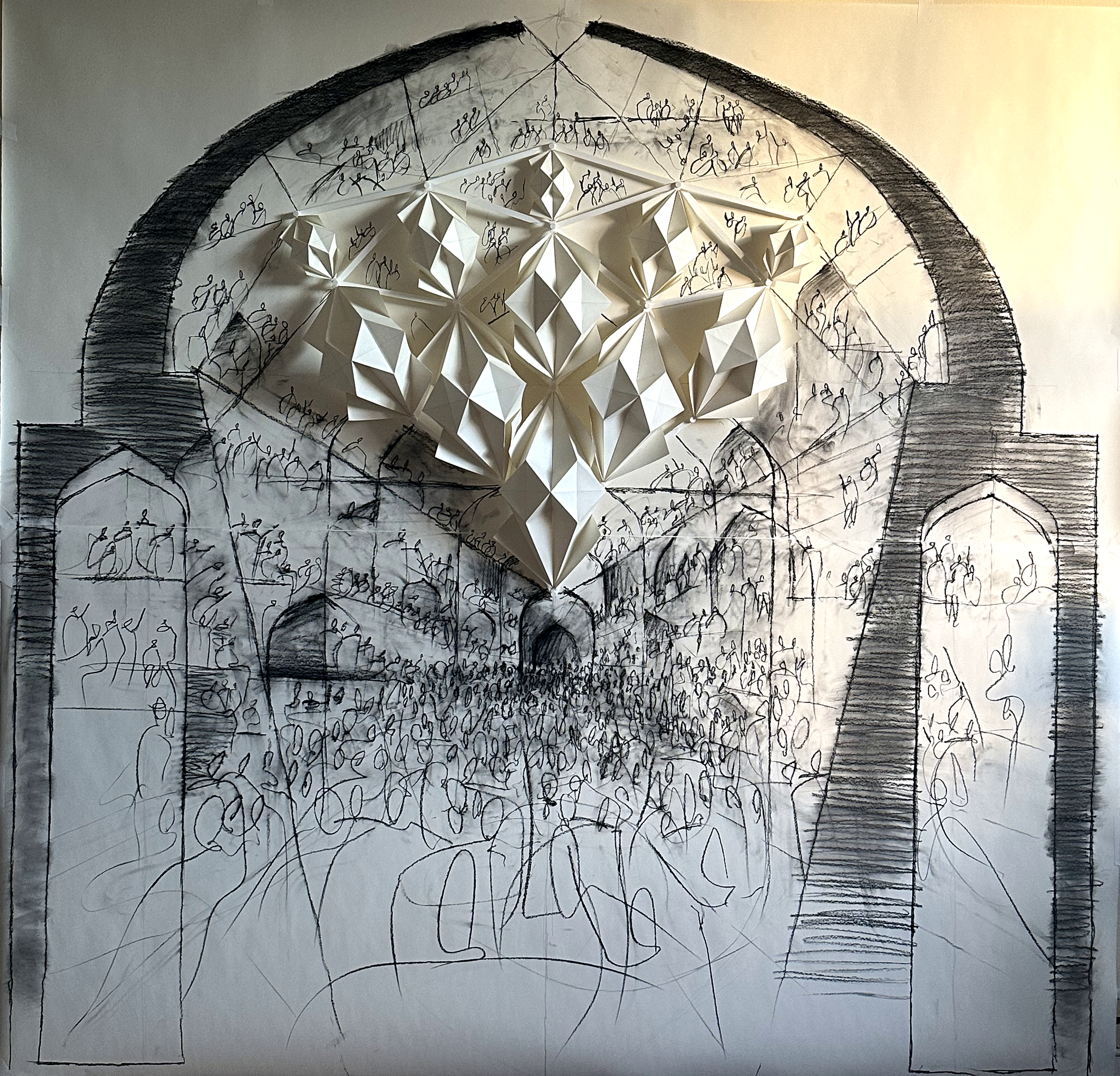
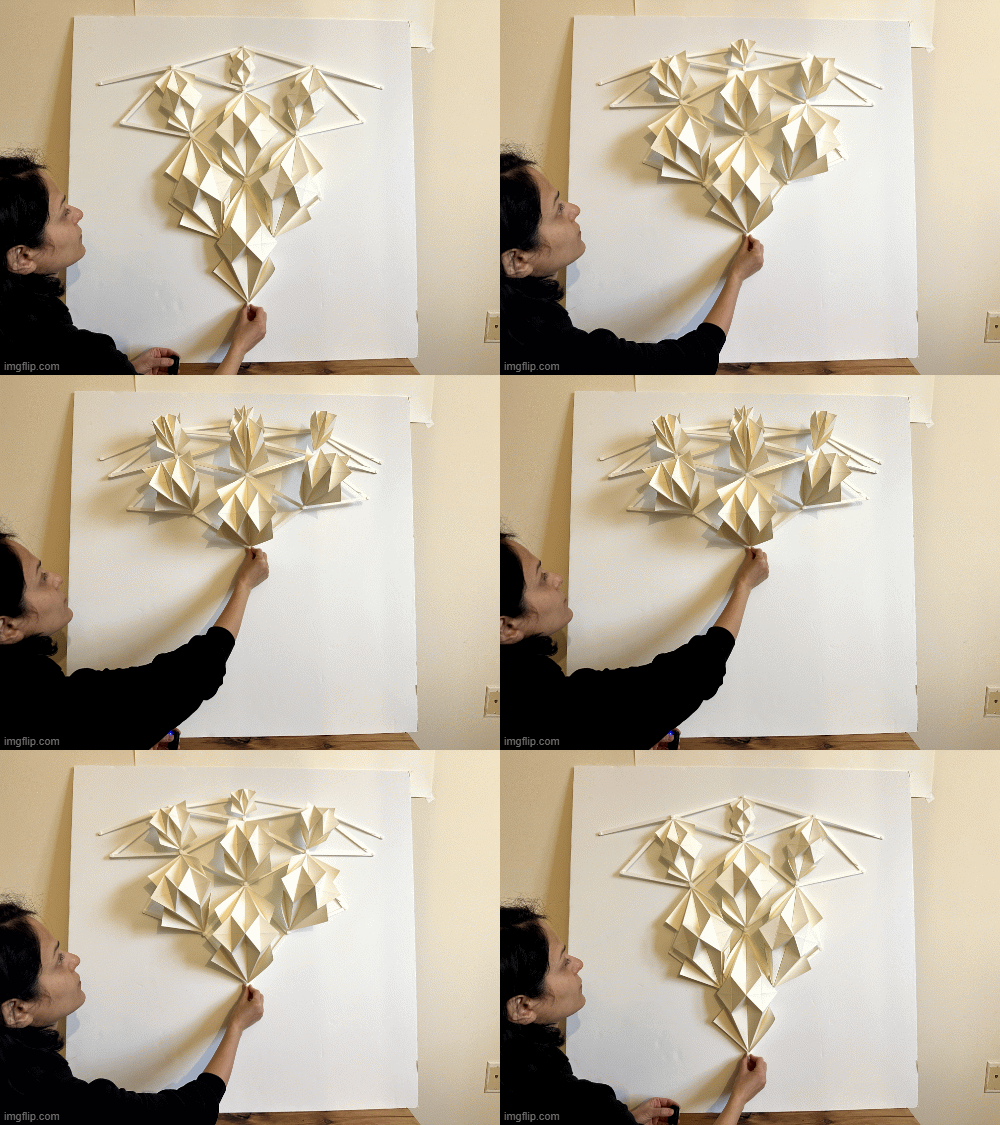
The drawings include kinetic pieces inspired by Iranian architecture. These moving elements come to life within the animation, presenting themselves as living parts of the structure.
CHĀHĀR SU
A chahār sū
is a natural place to pause, meet, and talk, because everyone passes through it. It is the main four‑way junction within a covered bazaar. The point where major market corridors cross.
Chahār-sū, as a crossroads, is not only a point of passage but a point of encounter. It is where paths intersect and voices meet. In this drawing, figures gather within that intersection, forming a space of exchange where listening becomes as important as speaking.
chahār sū is a place in Bazaar. It is where people begin to talk. When we speak, we make ourselves vulnerable, it can be frightening, but if we overcome that, we realise we all share doubts. We are stronger when we can talk and listen to each other. Chahār‑sū is the third drawing in the series, created at a time when we need each other more than ever.
NAGHSH E JAHAN SQUARE
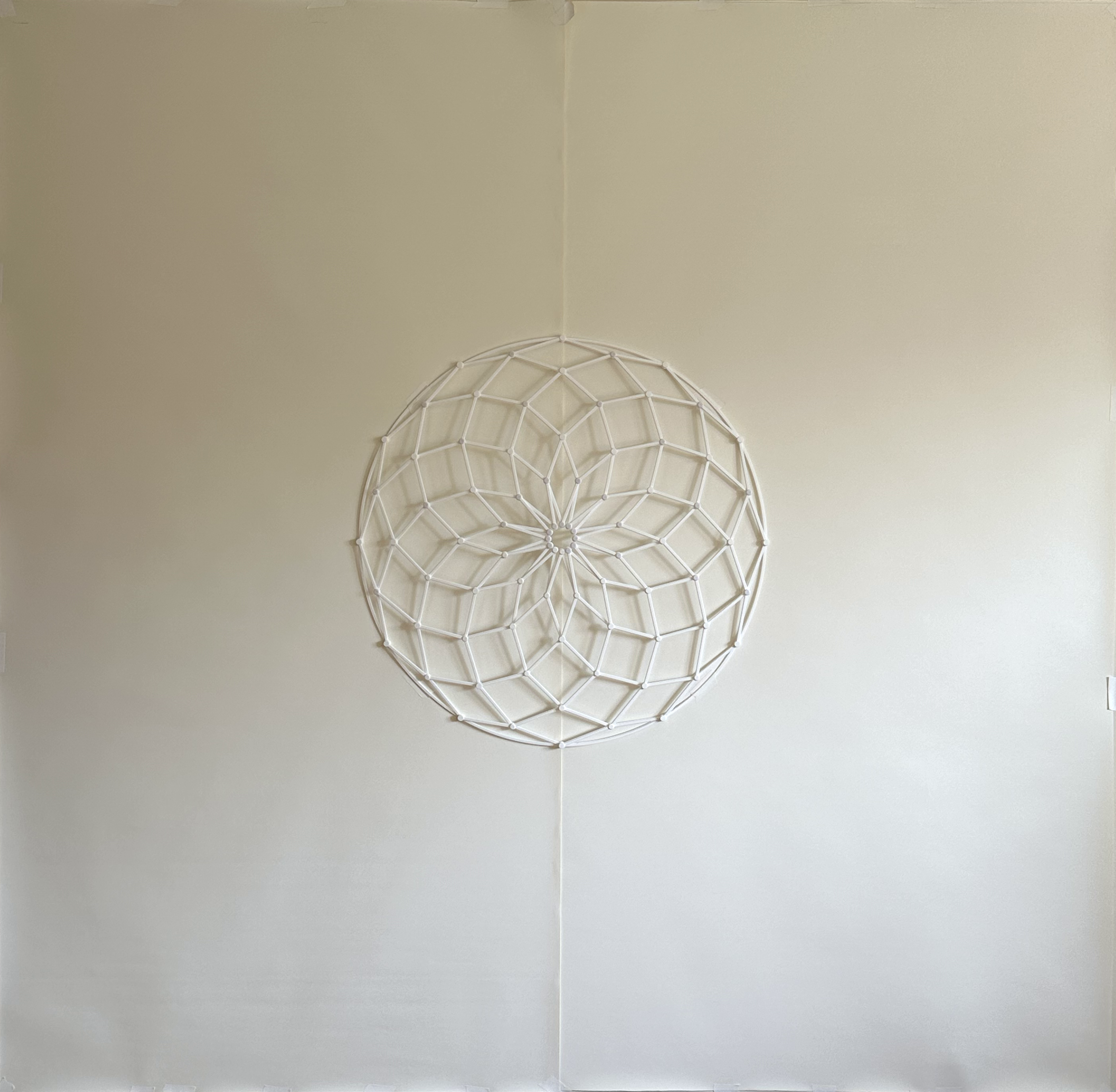
Historically, Naghsh e Jahan has served as a central stage for public life in Iran. A place for ceremonies, gatherings, and collective presence. At times, the square would be cleared to host large festivities and events, reinforcing its role as a shared civic ground.
Every now and then, the square would be cleared for public ceremonies and festivities.
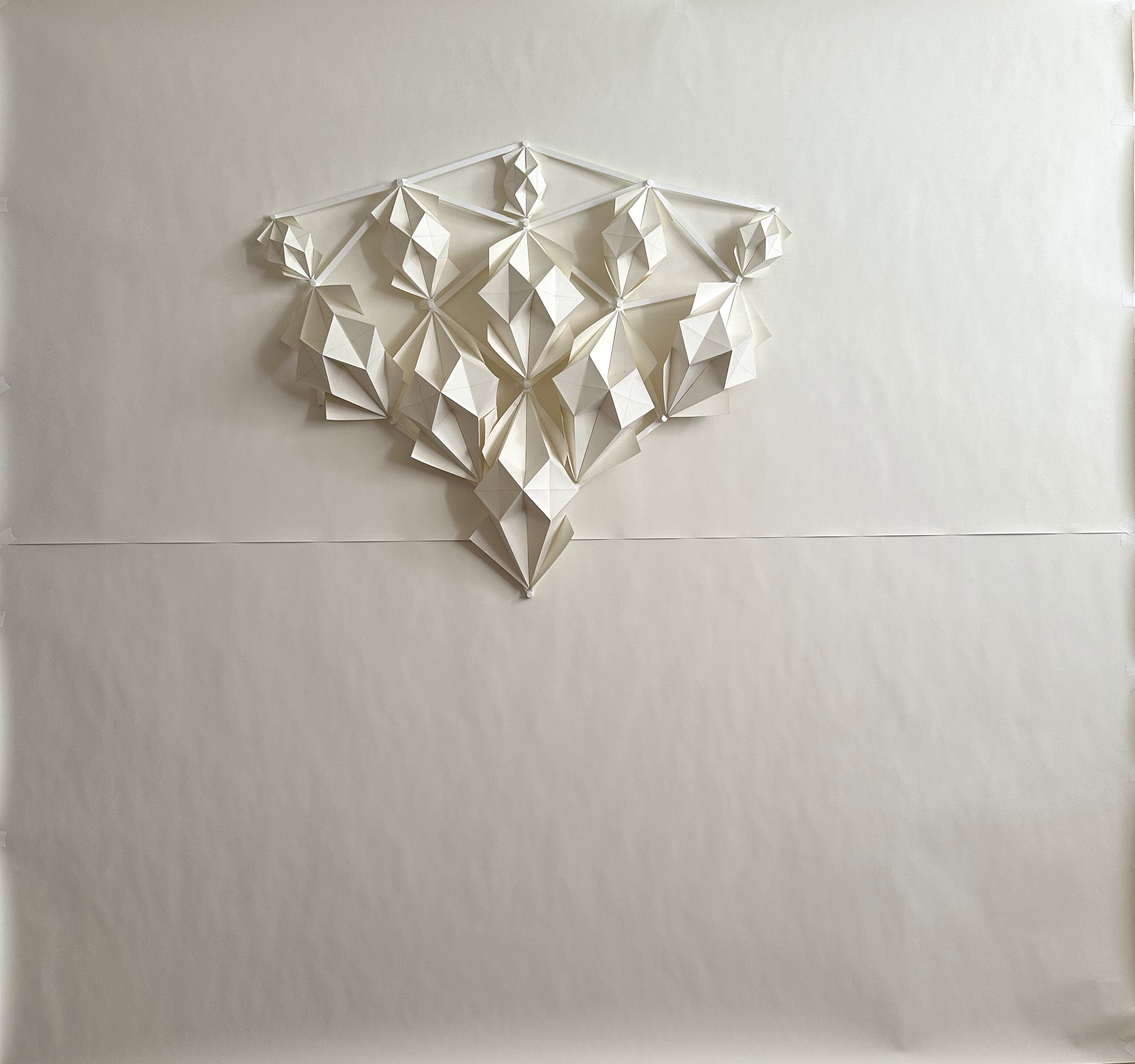
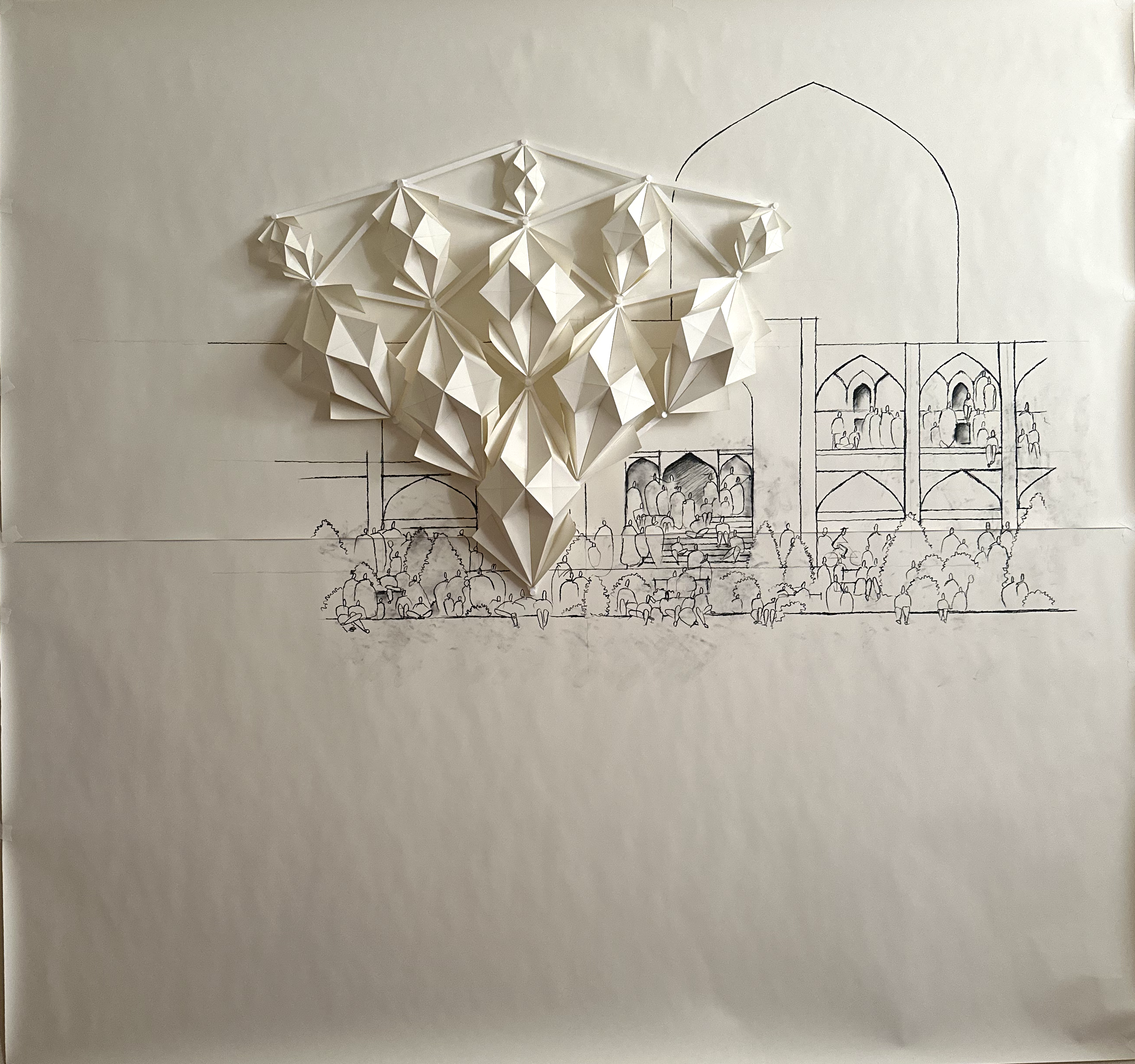
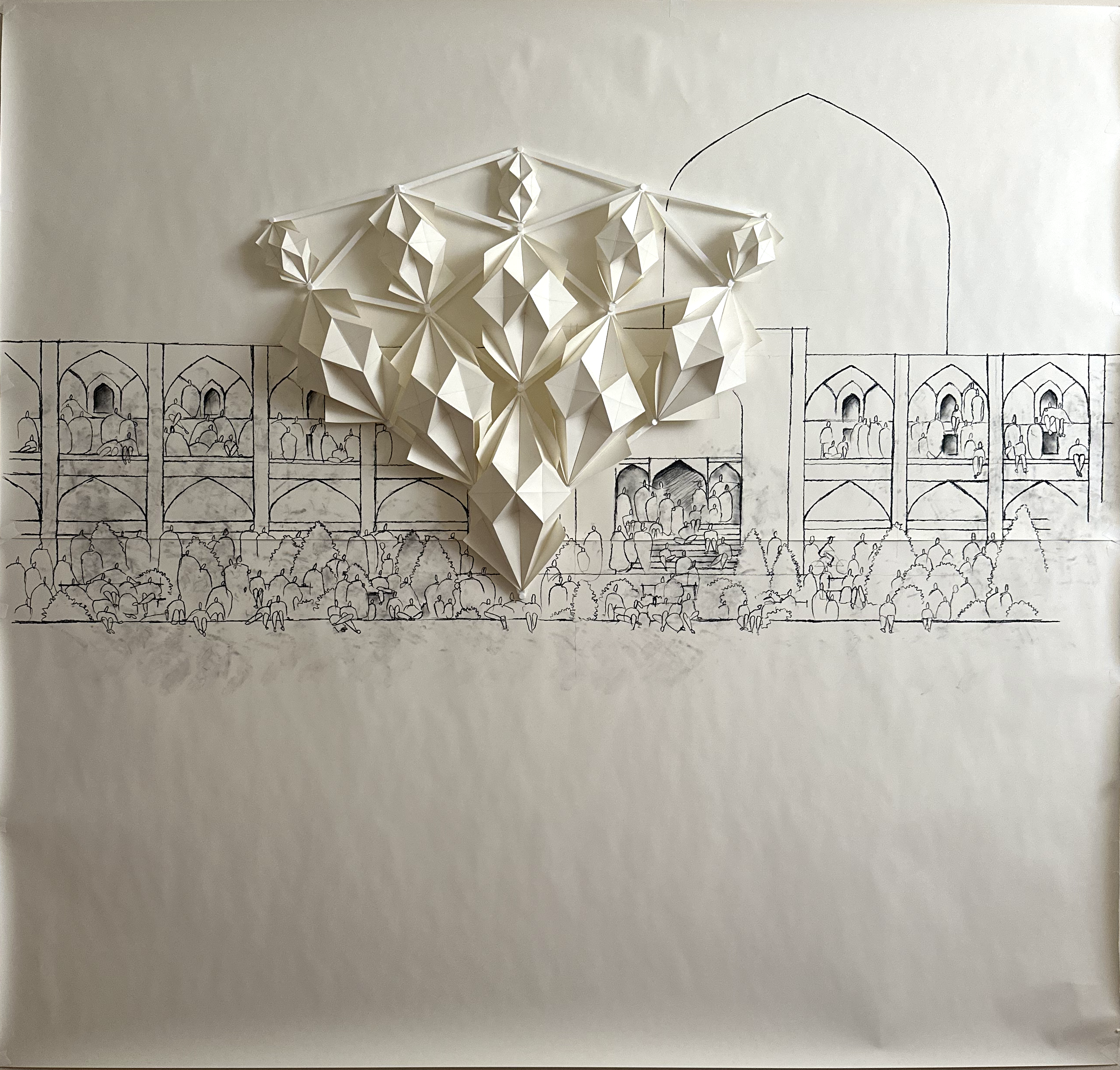
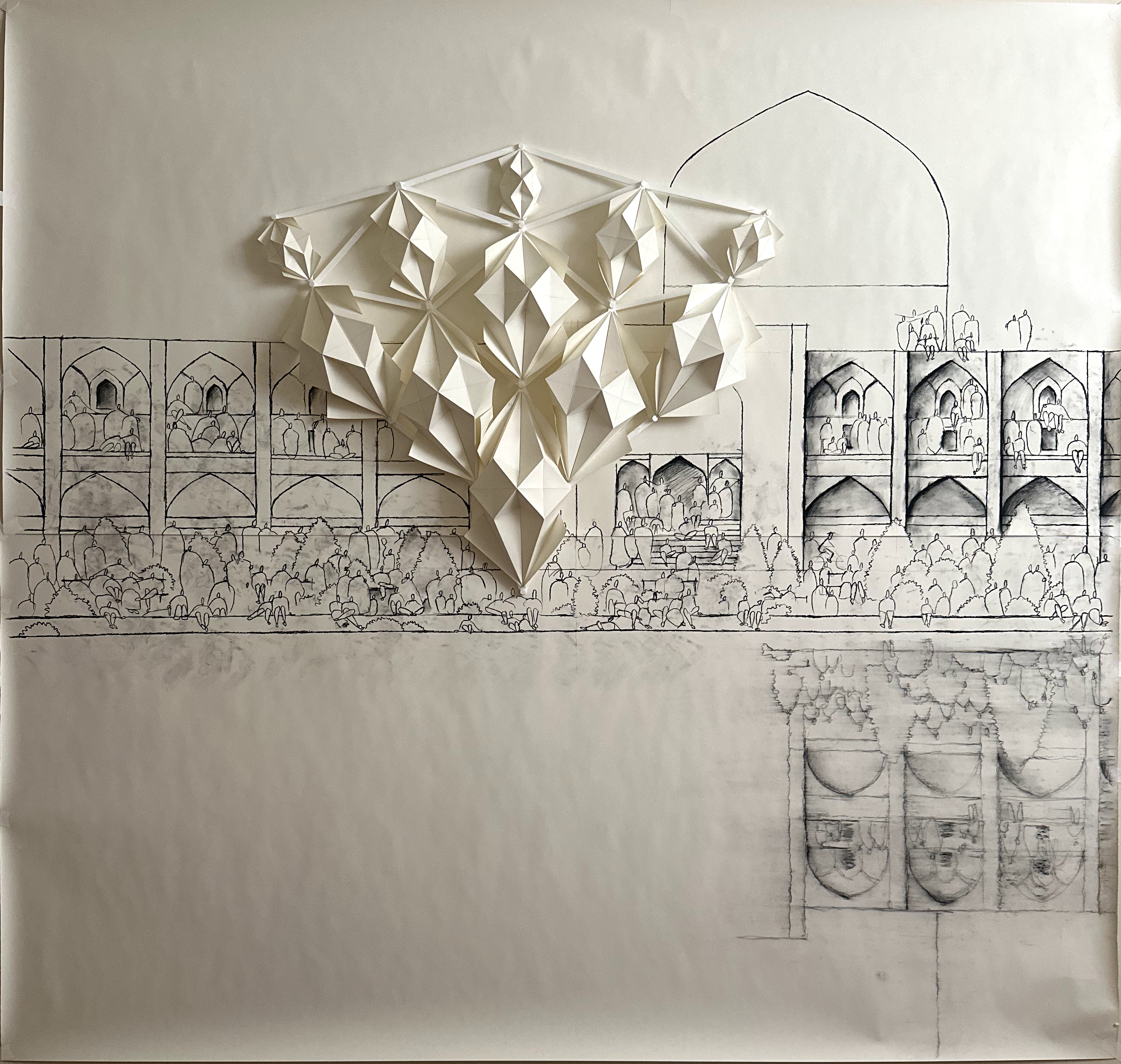
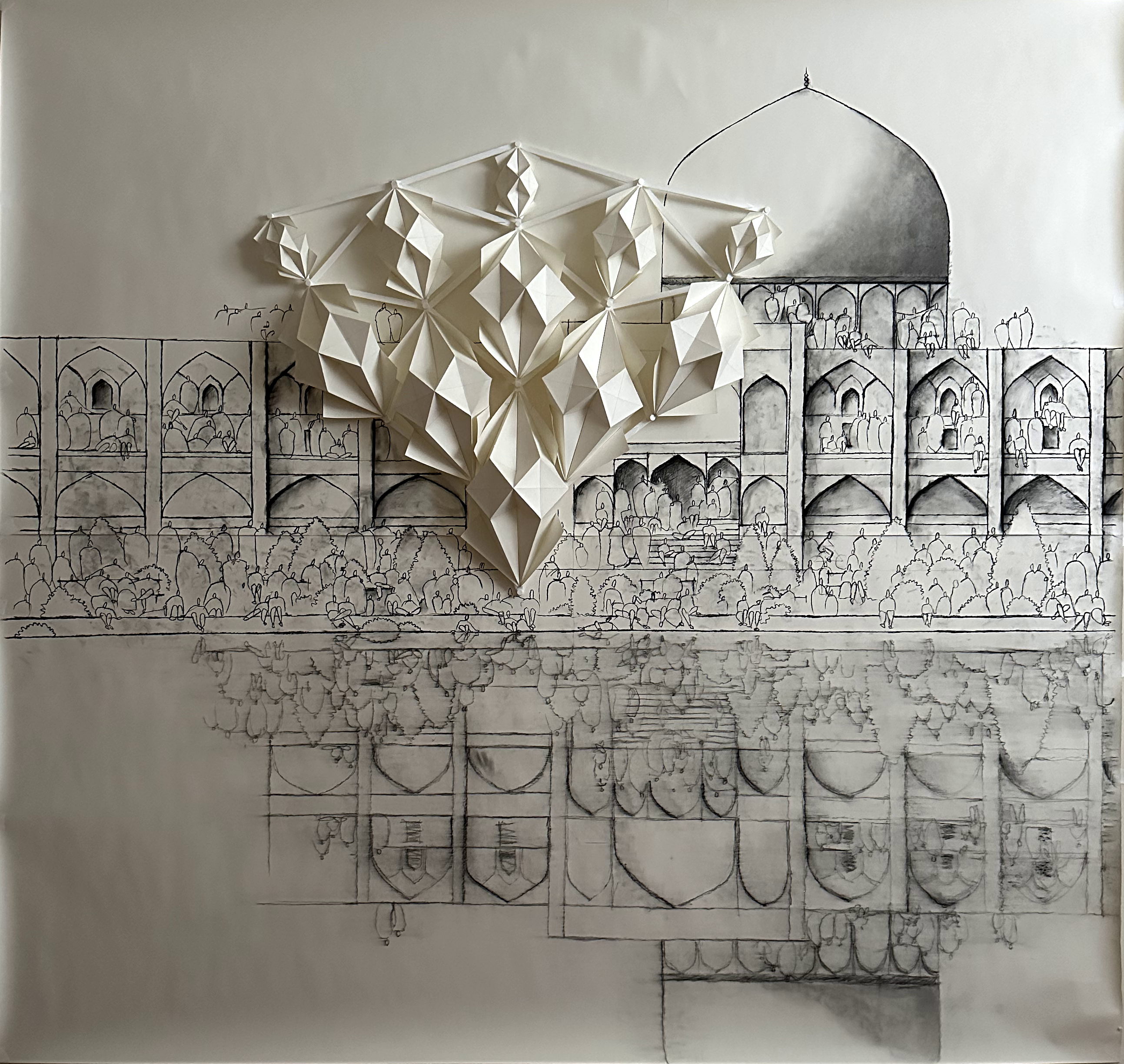
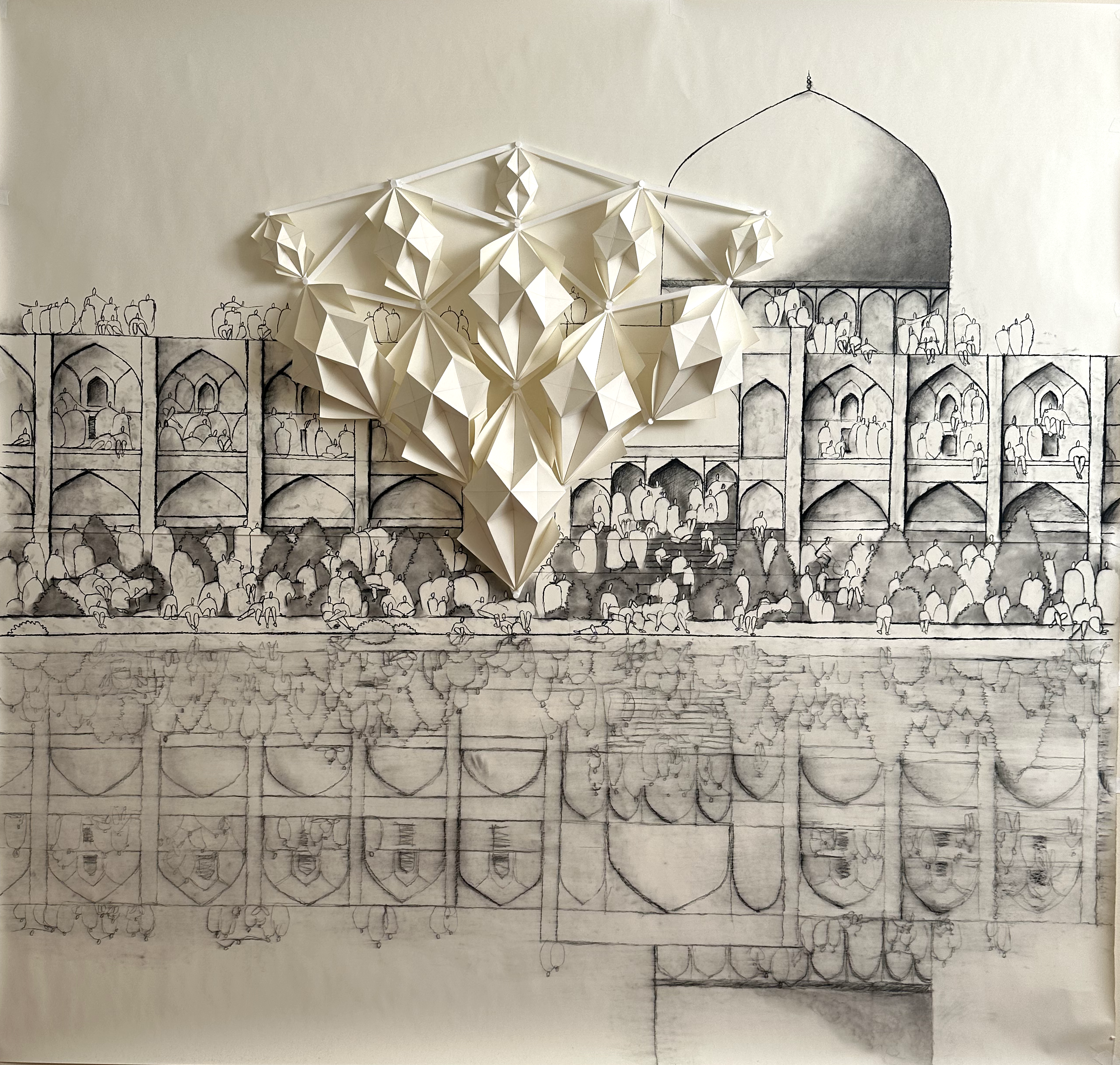
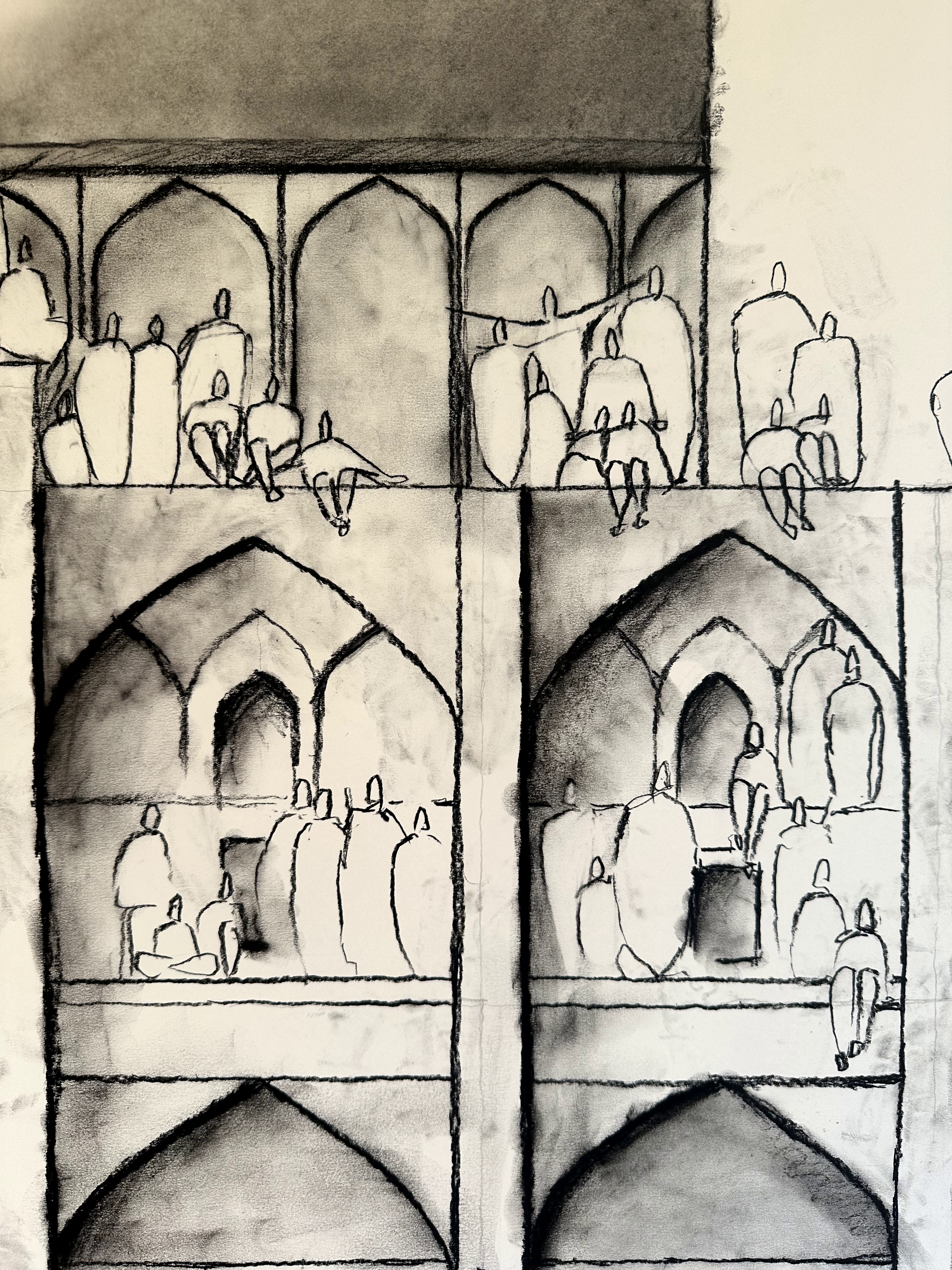
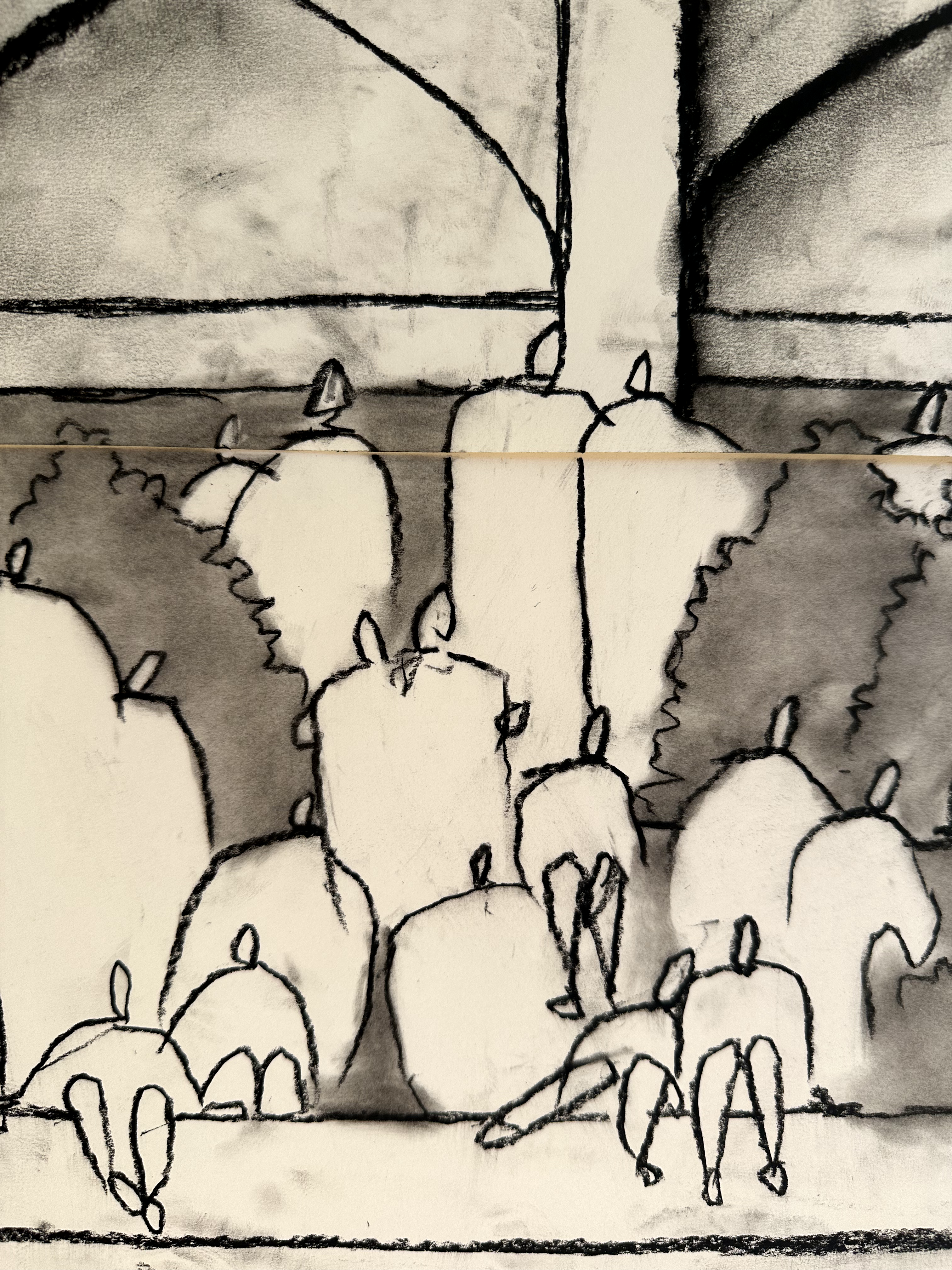
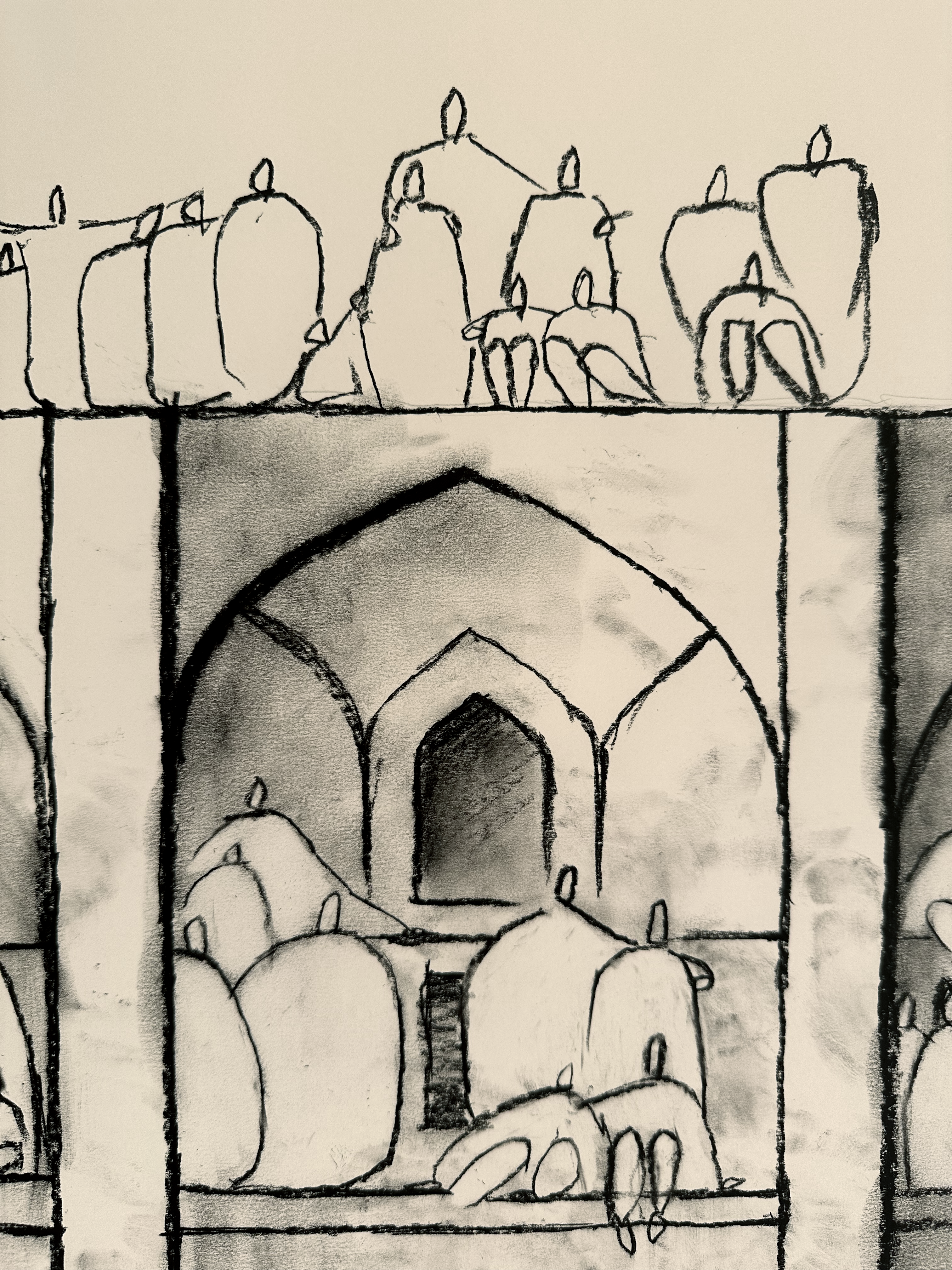

The drawing becomes an act of repopulation, where architecture is reactivated through the presence of bodies.
In its current emptiness, the absence of bodies becomes pronounced. This drawing imagines a redistribution of that presence, figures occupy not only the ground plane, but extend into the arcades and rooftops, expanding the square into a multi-layered spatial condition.
In its current emptiness, the absence of bodies becomes pronounced. This drawing imagines a redistribution of that presence, figures occupy not only the ground plane, but extend into the arcades and rooftops, expanding the square into a multi-layered spatial condition.
TABĀTABĀYIHĀ HOUSE
TABATABAYIHA house is located in Kashan city.
The central pool operates as a reflective plane, doubling and inverting the architecture, where the dome above is echoed below as both reflection and reconstruction.
Courtyard becomes vertically expanded through reflectin. Reflection is not incidental. It is intentional and compositional.


The howz (central pool) transforms the courtyard into a doubled spatial field, where the architecture is both constructed and reflected, extending its presence beyond its physical form.
MOURN
MOURN - Dance becomes a space where mourning and resistance coexist, where the body carries grief while insisting on life. Dance can hold mourning without silence. It becomes a physical language through which grief is expressed, but also transformed into presence, movement, and continuation. In this sense, dancing is not only an expression of loss, but an act of resistance—an insistence on living, even in the face of darkness.


The figures move between mourning and resistance, where dance becomes both a vessel for grief and a quiet insistence on life, echoing a longing to remain present against forces of erasure.


DOWLAT ABAD GARDEN


